What Everyone With At Least One Location Needs to Know About One of the Highest-ROI Traffic Channels
If you have at least one real-world location of any kind, local SEO may be one of the most underused growth levers in your business. That does not only mean a retail store. It can mean:
- A warehouse
- A 3PL location
- A return center
- A showroom
- A regional office
- A pickup point
- A call center
- A local service area
- A temporary pop-up or event footprint
That distinction matters because too many brands still think local marketing is only for restaurants, dentists, and neighborhood stores. It is not. Businesses with even one real operational footprint can use local SEO to capture high-intent demand from people looking for a nearby solution, a local partner, faster shipping, trusted support, or a place to buy now (1)(2)
For CustomBoxes.io’s audience, that matters more than most people realize. The company is already building around partner pages, QR-code initiatives, repeat-customer programs, 3PL ecosystems, and the idea that packaging should act like a marketing asset instead of just an operational expense (3)
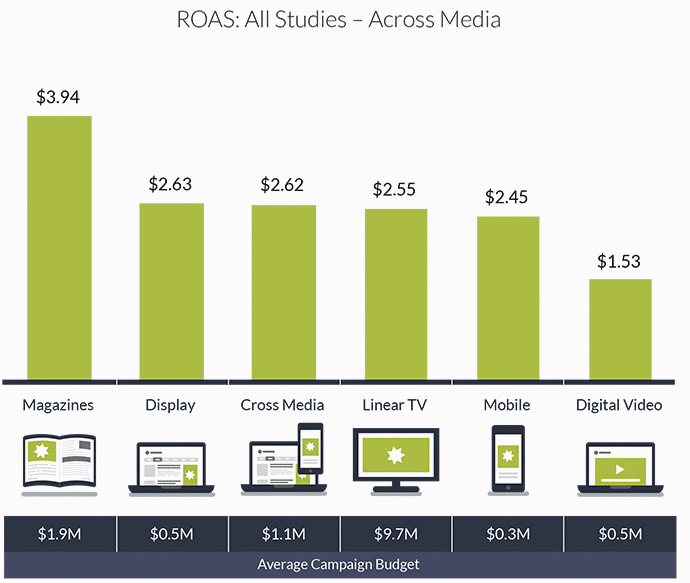
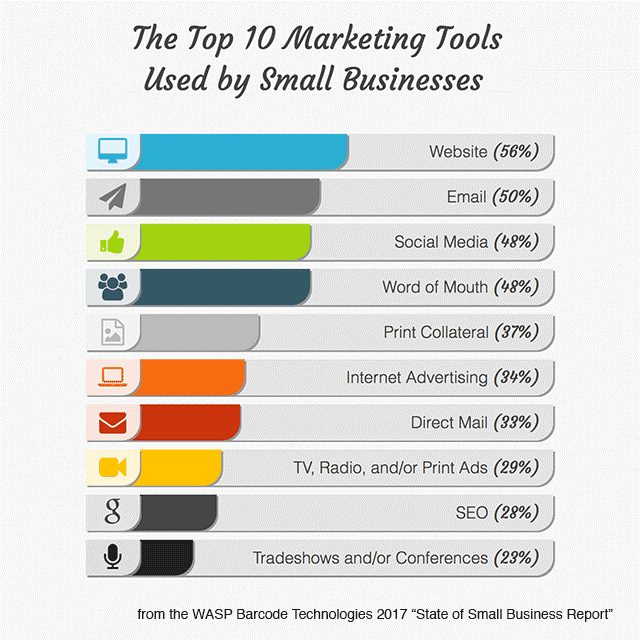
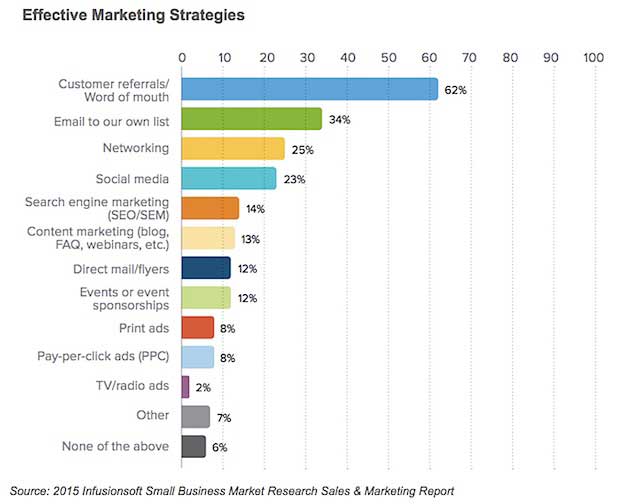
Here's the typical ROI/ROAS game plan for small businesses (specifically within Retail, CPG, eCommerce and other similar types of companies):

The main point
If you have at least one legitimate location or service footprint, local SEO deserves to be treated as one of the highest-ROI traffic channels available to you
Why:
- It captures high-intent demand
- It compounds over time
- It supports both Google search and AI-generated discovery
- It can be reinforced by reviews, landing pages, partner pages, and packaging
- It is still underused by many businesses that qualify for it
That is why Local SEO should be added to the chart as its own channel, not buried under generic SEO
My recommendation for the chart:
-
Usage/Penetration: relatively low compared with paid social and paid search, especially among non-traditional local businesses
-
ROI/ROAS: top-tier for businesses with at least one real location or service area and a serious execution plan
I would not force a fake exact ROAS number without internal performance data. The stronger claim is that Local SEO belongs in the highest-ROI tier and remains significantly underpenetrated outside traditional local categories
Why local SEO has become even more important
The shift is not just about Google Maps anymore. AI-generated answers are changing how people discover businesses. Local visibility now depends not only on rankings, but also on how clearly your business is described across the web through reviews, schema, citations, business profiles, service area signals, and local content (1)
That means local SEO is now doing two jobs:
-
Helping you rank in traditional local search
-
Helping AI systems understand who you are, where you operate, and why you are relevant
If your local signals are vague, inconsistent, or weak, you are more likely to disappear from both
Why local landing pages matter so much
A lot of businesses make the same mistake. They build one broad page and expect it to rank everywhere
That usually fails
The better approach is to build landing pages around real locations and real intent. Strong local landing pages tend to perform because they align what people are searching for with the location, trust signals, and offer that match that area (2)
The essential ingredients are simple:
- One page per real city, region, or service area
- Localized keywords and metadata
- Consistent business information
- Real reviews and local proof
- Mobile-first design
- Schema markup
- Strong calls to action
That is why local SEO often behaves more like demand capture than demand generation. You are not interrupting people. You are getting chosen when they are already looking
Define local more broadly than most people do
This is where many eCommerce and CPG brands think too narrowly
A business does not need 20 storefronts to benefit from local SEO
Examples:
- A DTC brand with a warehouse in New Jersey can build local pages around East Coast fulfillment speed
- A brand using a Las Vegas 3PL can create West Coast delivery pages
- A business with a Dallas return center can support local returns and exchanges
- A company with a sales or support team in Atlanta can build trust around regional service
- A brand sold through local boutiques can create pages tied to nearby store availability and local proof
That is especially relevant for CustomBoxes.io because the internal strategy already points toward co-branded landing pages, 3PL-specific pages, QR-code programs, and partner ecosystems designed to create repeatable growth systems rather than custom one-off work (3)
Where custom shipping boxes fit into local marketing
This is where the opportunity gets more interesting than a standard local SEO playbook
Most local SEO advice stops at Google Business Profile, citations, and landing pages
It misses the box
For CustomBoxes.io’s audience, custom shipping boxes can directly support local marketing in several ways
1) Shipping boxes with logo strengthen branded local search
A plain box disappears
A custom shipping box with logo increases brand recall and gives customers something more memorable to associate with the brand. That makes later branded search more likely, especially when people search for your brand plus a city, store, product category, or nearby service option
2) QR codes turn packaging into a local traffic source
This is one of the highest-leverage combinations available:
- Custom boxes with logo
- Dynamic QR codes
- Local landing pages
- Review requests
- Reorder offers
- Store locators
- Event pages
- Partner pages
CustomBoxes.io’s internal materials already frame QR-code and repeat-customer website initiatives as part of a scalable growth program, not just a packaging add-on (3)
That matters because a QR code on a logo shipping box can send customers to:
- Find us near you
- Reorder from your regional hub
- Leave a review for your local market
- See nearby retailers or wholesale stockists
- Visit our event in your city
- Learn about faster fulfillment from our closest 3PL partner
3) Packaging can help generate local reviews
Reviews are now doing more than conversion work. They also help search engines and AI systems understand what you do, who you serve, and where you serve them (1)
That creates a straightforward play:
- Put a QR code on the box or insert
- Route users to a review page
- Segment by market, city, retail partner, warehouse, or event
- Turn customer language into stronger local relevance over time
4) Packaging can support local partner ecosystems
CustomBoxes.io is already building around 3PL and partner pages, white-label flows, and co-branded landing experiences tied to custom shipping boxes and ROI tools (3)
That opens up a practical local strategy:
- Build local partner pages around 3PL footprints
- Show where brands can get support for custom packaging
- Create served-from or fulfilled-near pages
- Use QR codes and inserts to connect the physical box to partner landing pages
- Turn logistics infrastructure into a local marketing asset
The evolution of a brand and why local should start earlier
Most brands do not go from online-only to national retail overnight. The more common progression looks like this:
- Start online only
- Build DTC traction
- Expand into local or regional stores
- Support store-within-store visibility
- Launch pop-ups or small owned stores
- Build a broader physical footprint over time
The mistake is waiting until the final stage to take local seriously
Stage 1: Online-only, but with operational footprint
Even an online-only brand may already have a warehouse, return center, service area, or regional team. That is enough to start building local relevance
Stage 2: Online brand entering local stores
This is where local SEO becomes more powerful:
- Build pages for local availability
- Support retail partners
- Add location-specific FAQs
- Collect local reviews
- Connect packaging to nearby stockist pages
Stage 3: Store-within-store growth
This is a major opportunity for CPG brands
A store-within-store strategy can be supported by:
- Local landing pages
- Local social content
- Review generation
- QR codes on packaging
- Nearby availability pages
- Retail-specific promotions
- Local event tie-ins
That lets a brand market locally before it owns a store
Stage 4: Small owned stores or showrooms
At that point the classic local stack becomes obvious:
- Google Business Profile
- Local pages
- Reviews
- Photos
- FAQs
- Events
- Pickup flows
- Offers
- Service areas
The key is that the groundwork should begin earlier
What businesses with one location should do next
A) Stop thinking local only means storefront retail
If you have any legitimate real-world footprint, you may already qualify
B) Build one strong local landing page first
Do not start with 50 weak pages
Start with one real page for one real location or service area
C) Tighten business data everywhere
Your name, address, phone, service area, hours, and category signals need to be accurate and consistent
D) Add schema and location-specific FAQs
That helps both search engines and AI systems interpret your business clearly
E) Use reviews strategically
Collect reviews that naturally mention locations, service quality, turnaround speed, support, and use cases
F) Turn the box into a local marketing channel
Use:
- Custom boxes with logo
- Custom shipping boxes with logo
- Shipping boxes with logo
- QR codes
- Inserts
- Local offers
- Review asks
- Store locators
- Reorder flows
G) Build around real service footprints
Think beyond stores:
- 3PLs
- Warehouses
- Return hubs
- Partner locations
- Support teams
- Pop-ups
- Events
- Regional service areas
Bottom line
If you have at least one location of any kind, local SEO should not be treated like a niche tactic
It should be treated like a high-intent, high-ROI growth channel that can support both traditional search visibility and AI-driven discovery (1)(2)
For the CustomBoxes.io audience, the opportunity is even bigger because local marketing does not have to work alone. It can be reinforced by custom shipping boxes, QR codes, reviews, partner pages, 3PL ecosystems, store-within-store campaigns, and repeat-purchase flows that turn packaging into a measurable marketing asset rather than a sunk cost (3)
That is the real play
Not just ranking locally
Building a system where your custom boxes, local pages, reviews, QR codes, and real-world footprint all reinforce each other
Frequently Asked Questions (FAQs)
What counts as a “location” for local SEO?
A location is broader than a retail store. It can include a warehouse, 3PL, return center, regional office, showroom, call center, or defined service area that supports customers in a specific geography
Can an eCommerce brand benefit from local SEO?
Yes. If an eCommerce brand has any real-world footprint, local SEO can help it capture high-intent searches, support retail partners, strengthen trust, and improve visibility in both traditional search and AI-generated results
Why are local landing pages important?
Local landing pages help businesses rank for location-specific searches and convert visitors with more relevant copy, trust signals, local proof, and stronger calls to action
How do custom shipping boxes support local marketing?
Custom shipping boxes can reinforce brand recall, support local QR code campaigns, drive review collection, send customers to local landing pages, and connect offline delivery with online reorder or store-locator flows
How can QR codes improve local marketing?
QR codes can route customers to location-specific landing pages, review pages, reorder offers, event pages, store locators, and partner campaigns, making each shipment more measurable and actionable
Does local SEO still matter with AI search growing?
Yes. It matters even more. AI-generated answers often rely on clear business information, entity signals, reviews, schema, service area details, and consistent location data across the web
Can CPG brands use local SEO before opening their own stores?
Yes. CPG brands can use local SEO when selling through local stores, wholesale partners, pop-ups, and store-within-store placements long before they launch their own retail locations
References
- Neil Patel, “Localized SEO for LLMs: How Best Practices Have Evolved” (Neil Patel)
- Neil Patel, “The Step-by-Step Guide to Designing Local Landing Pages That Convert” (Neil Patel)
- CustomBoxes.io internal partnership and PR materials covering QR-code initiatives, 3PL partner pages, co-branded landing pages, ROI tools, and packaging-led growth programs
- https://www.hubspot.com/marketing-statistics
-
https://blog.promonavigator.com/wp-content/uploads/2021/04/roas-complete-guide-10.png
https://b2203234.smushcdn.com/2203234/wp-content/uploads/2020/11/top-marketing-tools.jpg?lossy=0&strip=1&webp=1 - https://www.brianmanon.com/wp-content/uploads/2019/06/social-media-goals-3-620x328.png
- https://media.licdn.com/dms/image/C4D12AQFJEEt_k3NtuA/article-cover_image-shrink_600_2000/0/1520131492847?e=2147483647&v=beta&t=AvRf2E8EYTy0Lv5aWYwBTPQCOKHCDfAdfhNA1pJsoNI
- https://i.pinimg.com/736x/73/cd/84/73cd84a94ab45f2502b2f79eeb00ba71.jpg
- https://i0.wp.com/bootcampdigital.com/wp-content/uploads/2015/06/Screen-Shot-2015-06-18-at-1.17.34-PM.png?ssl=1
- https://i.marketingprofs.com/assets/images/daily-data-point/strategies-infusionsoft-210115.jpg